Everyday Chemicals, Hidden Consequences: What Endocrine Disruptors Are Doing to Your Hormonal Health
The Problem Hiding in Plain Sight
You shower with it, eat from it, apply it to your face, and heat food in it. The average American woman encounters dozens of personal care products before she leaves the house in the morning, and the majority of those products contain at least one compound classified as an endocrine-disrupting chemical, or EDC. That term gets used a great deal in wellness circles, sometimes responsibly and sometimes not. What it actually means—and why it matters specifically for women—deserves a clearer examination.
Endocrine-disrupting chemicals are substances that interfere with the body's hormonal communication network. They do this in several ways: by mimicking estrogen or other hormones, by blocking receptor sites so that your own hormones cannot bind properly, or by altering the enzymes responsible for producing and metabolizing hormones in the first place. For women, whose health across every life stage is intimately tied to precise hormonal balance, this interference carries consequences that range from subtle and chronic to clinically significant.
What the Research Actually Shows
The science on EDCs is not fringe. The Endocrine Society—one of the most respected professional bodies in hormonal medicine—has published multiple position statements identifying EDCs as a major global health concern. Research has linked chronic low-level EDC exposure to irregular menstrual cycles, diminished fertility, accelerated onset of perimenopause, thyroid dysregulation, increased adiposity around the midsection, and elevated risk for estrogen-sensitive conditions including certain breast cancers and endometriosis.
The key phrase here is chronic low-level exposure. Regulatory agencies in the United States assess chemicals largely on the basis of single-dose toxicity—the idea that the dose makes the poison. But EDCs often operate differently. Some studies suggest they exert measurable biological effects at extremely low concentrations, and that their impact is amplified when multiple compounds are present simultaneously, a phenomenon researchers call the cocktail effect. Because most women are exposed to not one but many EDCs across the course of a day, the cumulative picture matters more than any individual chemical in isolation.
Where These Compounds Are Concentrated
Understanding where EDCs are most concentrated allows you to make targeted reductions rather than attempting an exhaustive—and ultimately unsustainable—overhaul of everything you own.
Personal care and beauty products represent one of the highest-exposure categories for women. Parabens, used as preservatives in moisturizers, shampoos, and cosmetics, have documented estrogenic activity. Phthalates, which help fragrance linger and give products a smooth texture, are found in everything from perfume to nail polish and have been associated with disrupted estrogen and androgen signaling. The United States lags significantly behind the European Union in restricting these ingredients, meaning many products legally sold at American drugstores and department stores contain compounds that are banned or heavily restricted elsewhere.
Food packaging and storage materials are another meaningful source. Bisphenol A (BPA) and its chemical cousins BPS and BPF leach from the lining of canned goods, thermal receipts, and certain plastics into food and drink—particularly when those containers are heated. PFAS compounds, sometimes called forever chemicals, are found in nonstick cookware coatings, microwave popcorn bags, and grease-resistant food wrappers. Both categories have been linked to thyroid disruption and altered estrogen metabolism in epidemiological studies.
Pesticide residues on produce contribute meaningfully to total EDC load, with certain organophosphates and fungicides classified as endocrine active. This is not an argument to avoid vegetables—quite the opposite. It is an argument for knowing which produce categories carry the highest residue burden and making selective choices accordingly.
Household products and furnishings round out the picture. Flame retardants in upholstered furniture, carpets, and electronics, along with certain cleaning product surfactants, add to the body's cumulative chemical burden over time.
Practical Reductions That Actually Move the Needle
The wellness industry has a tendency to turn legitimate concerns into anxiety-inducing, expensive mandates. The goal here is not fear—it is informed prioritization. You do not need to replace everything at once, and you do not need to spend significantly more money to meaningfully reduce your EDC exposure.
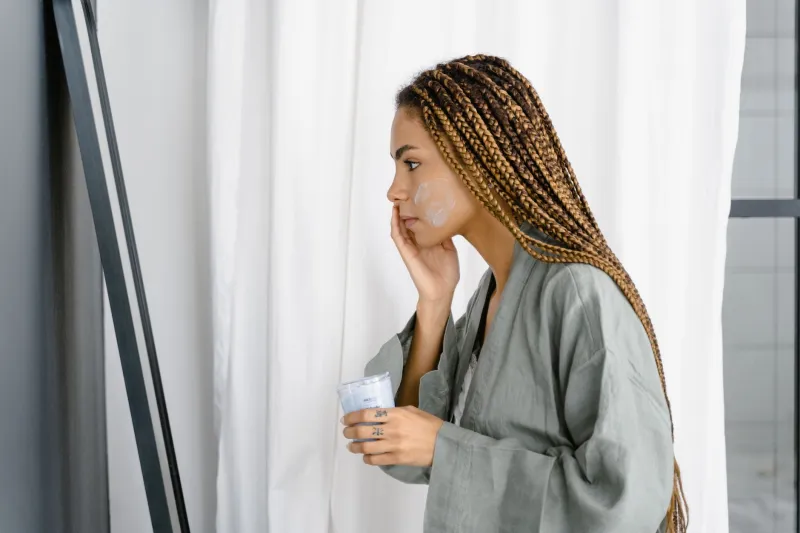
Start with your highest-contact personal care products. The items you apply to large surface areas of skin and leave on—body lotion, facial moisturizer, sunscreen—deserve the most scrutiny. The Environmental Working Group's Skin Deep database is a free, searchable tool that rates products based on ingredient safety data. Swapping one or two high-exposure daily products for cleaner alternatives is a proportionate, manageable first step.
Reconsider how you store and heat food. Transferring canned goods to glass or stainless containers after opening, avoiding microwaving food in plastic, and choosing fresh or frozen produce over heavily processed canned options are low-cost habit changes with a measurable impact on daily BPA intake.
Ventilate your home regularly. Indoor air consistently measures higher in certain EDC concentrations than outdoor air, partly because dust accumulates flame retardants and other compounds from household materials. Opening windows and using a HEPA air filter in rooms where you spend the most time—particularly the bedroom—is a straightforward intervention.
Filter your drinking water. A certified pitcher or under-sink filter that meets NSF/ANSI Standard 53 removes a broad range of contaminants including certain pesticide residues and PFAS compounds. This is one of the highest-value changes available at a relatively modest cost.
Choose fragrance-free when possible. The word "fragrance" on an ingredient label is a legally protected trade secret that can encompass dozens of unlisted chemicals, many of them phthalates. Opting for fragrance-free versions of laundry detergent, fabric softener, and cleaning products eliminates a significant source of daily inhalation and skin exposure.
Supporting Your Body's Own Detoxification Capacity
Your liver, kidneys, lymphatic system, and gut microbiome are continuously working to identify, metabolize, and eliminate chemical compounds—including EDCs. Supporting these systems through evidence-based means is far more productive than any commercially marketed "detox" product.
Adequate fiber intake supports the elimination of estrogen metabolites through the gut. Cruciferous vegetables—broccoli, cauliflower, Brussels sprouts—contain compounds that promote healthy estrogen metabolism pathways in the liver. Staying well-hydrated supports renal clearance. Prioritizing sleep, during which the glymphatic system performs critical cellular cleanup, is arguably the most underutilized detoxification strategy available.
For women dealing with persistent hormonal symptoms that have not resolved despite conventional evaluation, a comprehensive assessment that includes consideration of environmental chemical burden may be warranted. Functional and integrative approaches to women's health are increasingly incorporating this lens.
Informed Choice Over Wellness Theater
Reducing your EDC exposure is not about achieving a mythical state of chemical purity. It is about recognizing that your body is navigating a chemical environment that did not exist for most of human history, and that the cumulative effect of that navigation has real biological consequences—particularly for the hormonal systems that govern so much of women's health and quality of life.
The changes that matter most are not the most dramatic or the most expensive. They are the ones you make consistently, in the categories where your personal exposure is highest. That is not a wellness trend. That is applied science, and it belongs in every woman's health conversation.