Your Lymphatic System Is Running the Show—And Most Women Have Never Heard of It
Every week, a new product claims to "detox" your body. Teas, patches, supplements, and wraps fill social media feeds with promises of cleansing and clarity. But before any of that conversation is worth having, there is a more fundamental question: do you know which organ is actually responsible for clearing the body's waste?
It is not the liver alone. It is not the kidneys. The answer, largely overlooked in mainstream wellness education, is the lymphatic system—a vast, fluid-filled network of vessels, nodes, and organs that operates in parallel with your circulatory system and does work that no other system can replicate. For women specifically, its health is not optional. It is foundational.
What the Lymphatic System Actually Does
Think of your lymphatic system as the body's sanitation department. Unlike blood, which is pumped by the heart, lymphatic fluid—called lymph—has no dedicated pump. It moves through a network of thin-walled vessels by a combination of muscle contractions, breathing patterns, and postural movement. Along the way, it collects cellular debris, excess interstitial fluid, immune cells, and metabolic byproducts, routing them through lymph nodes for filtration before returning clean fluid to the bloodstream.
The lymph nodes themselves act as checkpoints. They house white blood cells that identify and neutralize pathogens, abnormal cells, and inflammatory triggers. When the system is functioning well, this process is invisible. When it is compromised or congested, the effects are anything but subtle: persistent puffiness, skin dullness, recurrent infections, fatigue, and a general sense of feeling "heavy" or "off" that is difficult to articulate to a physician.
Why Female Physiology Changes the Equation
Research indicates that the lymphatic system in women is not simply a scaled version of the male model. Estrogen and progesterone receptors have been identified in lymphatic vessel walls, meaning hormonal fluctuations directly influence how efficiently lymph flows. During the luteal phase of the menstrual cycle—the roughly two weeks between ovulation and menstruation—progesterone rises and can cause lymphatic vessels to dilate and slow. This partially explains the bloating, breast tenderness, and facial puffiness many women experience in the days before their period. It is not imagined. It is physiological.
During pregnancy, lymphatic demand increases dramatically as the body manages additional fluid volume and supports immune tolerance of the developing fetus. In perimenopause and menopause, declining estrogen can reduce the contractile efficiency of lymphatic vessels, contributing to the increased inflammatory burden many women report during this transition. The connection between hormonal shifts and lymphatic function is real—and it deserves far more clinical attention than it currently receives.
The Congestion Problem No One Names
Lymphatic congestion—sometimes called lymphatic stasis—occurs when flow is impaired and fluid accumulates in the tissues. Women are disproportionately affected for several reasons beyond hormonal influence. Sedentary lifestyles, tight undergarments (particularly underwire bras that compress axillary lymph nodes near the armpit), chronic stress, poor sleep, and low hydration all contribute to sluggish lymph flow. Even shallow breathing, a habit many women develop under chronic stress, reduces the thoracic pressure changes that help drive lymphatic movement.
The result is a system that cannot clear waste efficiently. Skin may appear dull or congested. Immune response may feel perpetually reactive. Some women describe a persistent low-grade sense of inflammation that no single test captures—because it is systemic, not localized.
What the Evidence Actually Supports
This is where the wellness industry and the science part ways—and where clarity matters most.
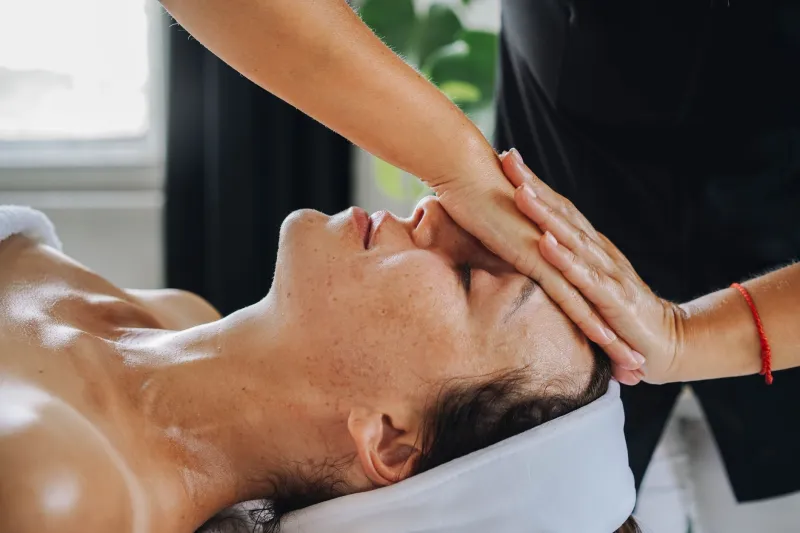
Manual Lymphatic Drainage (MLD): Developed in Europe in the 1930s and refined over decades, MLD is a specialized massage technique that uses light, rhythmic strokes to stimulate lymphatic vessel contractions and encourage fluid movement toward drainage sites. It is one of the few lymphatic interventions with a substantial body of clinical research behind it, particularly in the management of lymphedema—chronic lymphatic swelling—following cancer treatment. For general wellness, MLD performed by a certified therapist can meaningfully support fluid balance, reduce post-surgical swelling, and improve skin texture. It is not a luxury. It is a clinical tool being increasingly recognized as such.
Dry Brushing: The evidence base here is more modest, but the physiological rationale is plausible. Dry brushing—moving a firm-bristled brush across the skin in the direction of lymph flow—stimulates superficial lymphatic vessels and may enhance circulation in the skin's upper layers. It also provides mild mechanical exfoliation. The key word is superficial; dry brushing does not reach deep lymphatic trunks. It is best understood as a supportive daily habit rather than a primary therapeutic intervention.
Movement and Rebounding: Because the lymphatic system depends on muscular contraction to move fluid, intentional movement is arguably the most accessible and evidence-supported way to support lymph flow. Walking, yoga, swimming, and resistance training all engage the muscle pump mechanism. Rebounding—bouncing on a mini trampoline—has attracted particular attention because the repetitive changes in gravitational force may enhance lymphatic vessel contractions. While large-scale clinical trials are limited, the physiological mechanism is sound, and the practice has low risk and reasonable accessibility.
Diaphragmatic Breathing: Deep, belly-centered breathing creates pressure gradients in the thoracic cavity that act as a secondary pump for the lymphatic system. The thoracic duct—the body's largest lymphatic vessel—empties into the venous system near the collarbone, and its flow is directly influenced by respiratory mechanics. Practicing slow, intentional diaphragmatic breathing for even ten minutes daily is one of the most underutilized and cost-free lymphatic support strategies available.
Hydration: Lymph is approximately 95 percent water. Chronic dehydration thickens lymphatic fluid and slows its movement through vessels. Adequate hydration—individualized to body weight, activity level, and climate—is not glamorous, but it is genuinely foundational.
What Does Not Work the Way It Claims
Lymphatic detox teas, foot pads, and systemic "cleanse" products lack credible evidence for directly influencing lymphatic function. Some herbal ingredients, such as red clover and cleavers, have traditional associations with lymphatic support, but clinical evidence in humans is sparse. Marketing language that promises to "flush toxins" through the lymphatic system via a supplement or wrap should be evaluated with appropriate skepticism. The body's detoxification processes are sophisticated and ongoing—they require support, not shortcuts.
Lymphatic Health as a Clinical Conversation
At Femme Health & Med Spa, we believe that understanding your body's foundational systems is the prerequisite for meaningful wellness decisions. Lymphatic health is not a fringe concept—it is increasingly recognized as central to immune function, hormonal regulation, skin health, and inflammatory management. If you have been experiencing persistent puffiness, recurrent skin congestion, unexplained fatigue, or a sense that your body is simply not clearing the way it should, the lymphatic system is a conversation worth having with your care team.
The good news is that many of the most effective supports—movement, breathing, hydration, and skilled manual therapy—are accessible, low-risk, and grounded in physiology rather than marketing. Your lymphatic system has been working on your behalf your entire life. It may simply be waiting for you to work with it.